
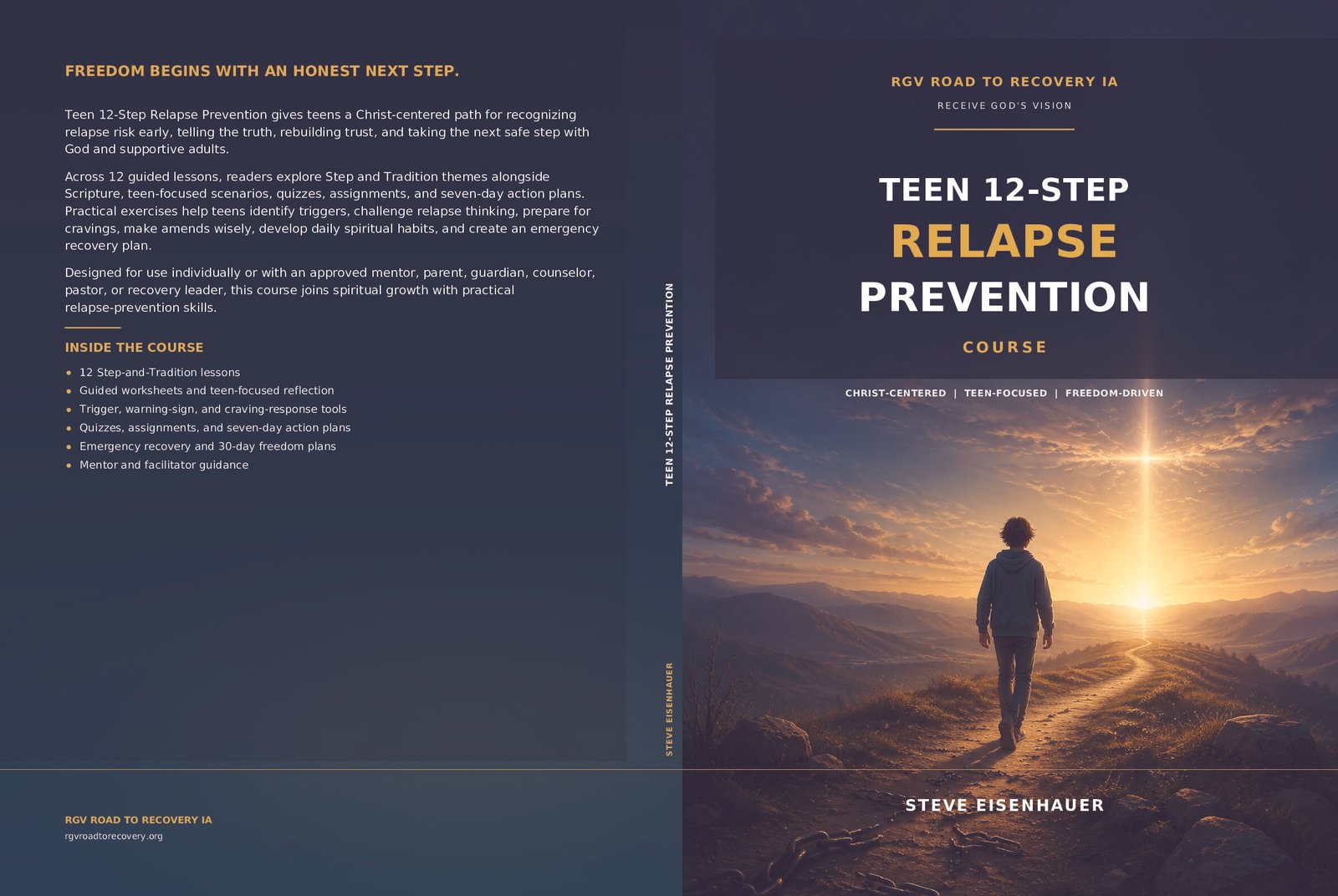
TEEN 12-STEP RELAPSE PREVENTION: Christ-Centered. Teen-Focused. Freedom-Driven.
Author: Steve Eisenhauer Publisher: SS Eisenhauer Enterprises LLC Published: September 2, 2026 ISBN: 9798171479817 Pages: 114 Country: USA Language: English Dimension: 8.49 x 0.45 x 11.24 inches More DetailsTEEN 12-STEP RELAPSE PREVENTION: Christ-Centered. Teen-Focused. Freedom-Driven.
Relapse rarely begins with a single choice. It often starts earlier—with isolation, distorted thinking, missed warning signs, and the belief that no one will understand. Teen 12-Step Relapse Prevention Course helps teens recognize that process early and respond with honesty, faith, practical action, and support from trustworthy adults.
Created by Steve Eisenhauer for RGV Road to Recovery IA, this Christ-centered curriculum guides young people through 12 structured lessons pairing a recovery Step with a community-building Tradition. Each lesson connects biblical truth with challenges teens face: peer pressure, shame, family conflict, cravings, secrecy, impulsive decisions, unhealthy relationships, and fear of asking for help. The goal is not perfection. The goal is to help teens become more honest, safe, connected, teachable, responsible, and free.
Beginning with the courage to admit that addiction has become unmanageable, teens learn why needing God and other people is not weakness. They explore hope, surrender, self-examination, confession, readiness for change, humility, responsibility, amends, daily inventory, prayer, Scripture, service, and spiritual growth. Step themes address personal change, while Tradition themes show how unity, healthy authority, service, and humility protect recovery communities.
This guided recovery workbook is designed to be completed one lesson at a time. Every lesson includes teaching, Scripture study, relapse-prevention connections, triggers, warning signs, protective actions, thought-replacement exercises, a teen scenario, guided discussion, a four-question quiz, an assignment, and a seven-day freedom plan. Writing areas encourage teens to slow down, tell the truth, identify personal risks, and turn insight into action.
Readers will learn how to:
- Recognize emotional, mental, spiritual, social, and environmental warning signs before risk becomes a crisis
• Identify people, places, thoughts, feelings, access points, and situations connected with relapse
• Replace relapse-supporting thoughts with truth grounded in Scripture and wise counsel
• Build a dependable recovery team and ask for help before acting on an urge
• Respond to cravings with immediate, practical steps
• Prepare safe confession and amends plans with responsible adult guidance
• Establish habits of prayer, Scripture, reflection, and daily inventory
• Strengthen boundaries involving substances, devices, money, transportation, and risky contacts
Additional resources include a recovery-team page, baseline assessment, emergency recovery plan, 15-minute craving response, trigger and warning-sign map, 30-day freedom plan, weekly reviews, answer key, facilitator guidance, a suggested 60-minute session format, group agreements, and a completion certificate.
The course supports individual study, mentoring, family-guided recovery, church ministries, youth recovery groups, counseling support, recovery housing, chaplaincy, and other supervised settings serving teens affected by addiction or destructive behaviors. The language is accessible to teens while giving parents, guardians, pastors, counselors, mentors, and recovery leaders a structure for meaningful conversations.
Safety remains central. Teens are encouraged to involve an approved responsible adult in trauma, confession, amends, crisis, and high-risk situations. This curriculum does not replace medical care, licensed treatment, prescribed medication, emergency services, or mandatory-reporting responsibilities.
Recovery does not require a teen to have every answer before beginning. It begins with one honest admission, one safe conversation, one wise decision, and one willingness to let God lead the next step. With Scripture, practical planning, supportive relationships, and repeated action, young people can recognize danger earlier, respond more wisely, rebuild trust, and keep moving toward lasting freedom.
Christ-Centered. Teen-Focused. Freedom-Driven.