
RGV Road to Recovery IA
A Place to Belong
A Scripture-Centered Journey Through Loneliness and Social Isolation
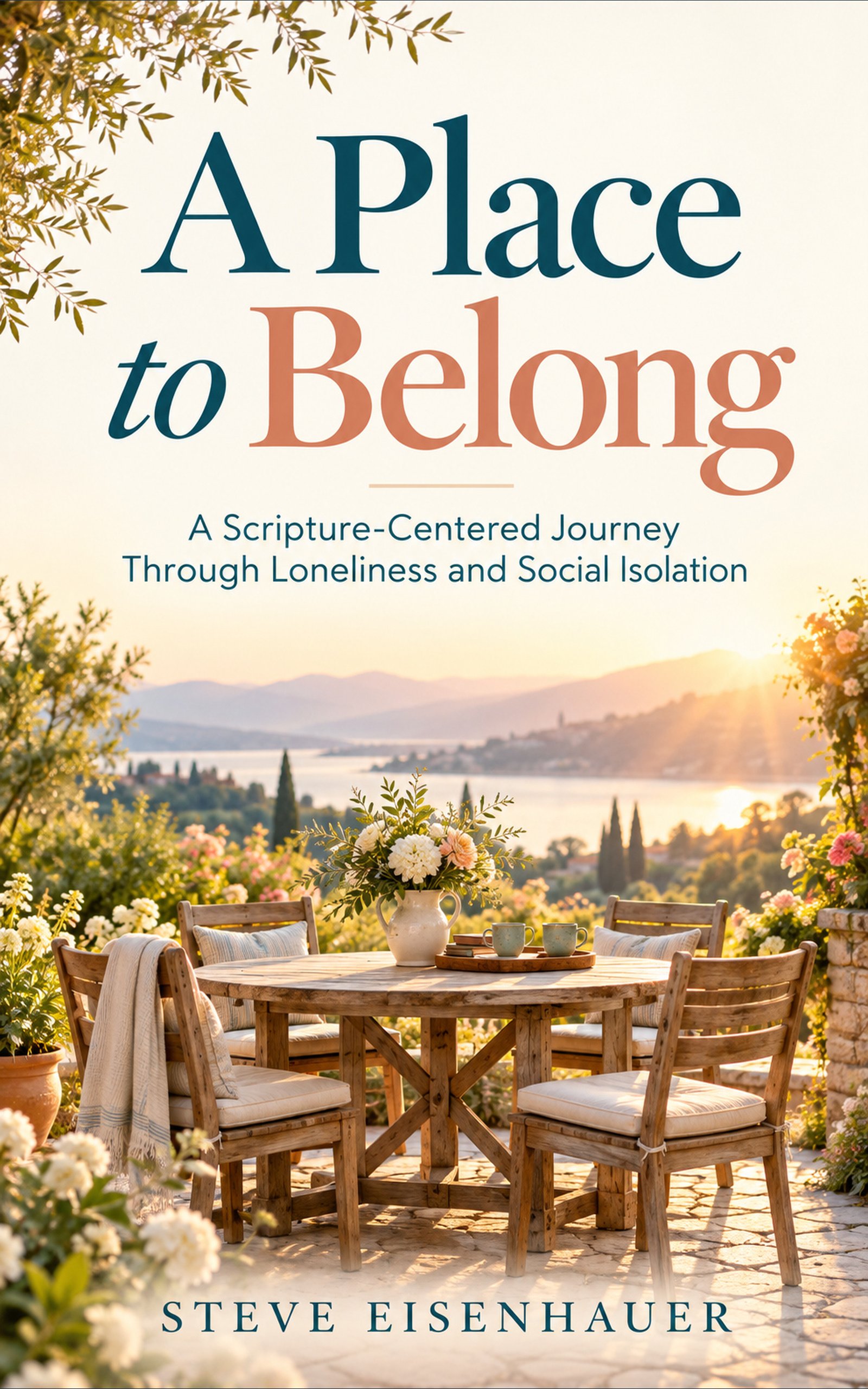
You can miss meaningful company even when the calendar is full. A Place to Belong pairs King James Version Scripture with manageable ways to respond to loneliness and social isolation, from making one clear invitation to finding a community you can return to.
Across twelve units, Steve Eisenhauer explores grief and changing relationships, barriers to participation, trust and boundaries, digital connection, and the disappointment of an unanswered invitation. Readers learn to offer and receive help, recognize practical signs of welcome, and build a realistic connection plan.
Fictional cases, guided worksheets, reflection questions, prayers, and knowledge checks support individual study and facilitated discussion. The ninety-day plan helps readers choose a rhythm that fits their circumstances and notice which relationships or settings offer room for meaningful participation.
How the course works
Read the units in order or begin with the barrier you face this week. Start with the KJV passage, then read the fictional case and select one action you could realistically practice. Use the knowledge check to review the lesson before committing to a step.
Use this workbook individually, with a mentor, or in a facilitated group. You may work with a fictional example, skip a reflection, or pause and return to it later.
Select one action you can own. Sending an invitation, asking about access, or showing up for part of a meeting are examples. Other people’s availability and responses remain theirs. Consider whether the interaction fit your needs before judging your progress by the number of contacts you made.
If you lead a gathering, try the exercises from a newcomer’s point of view. Ask what readers or participants need to know before arriving and how they can participate with privacy, flexibility, and room to decline.
Each unit includes a self-check. The final knowledge check is untimed and automatically graded, with unlimited retries. A score of 100% completes the assessment.
Safety and support
This workbook offers Christian education and personal reflection. When persistent distress interferes with daily life or a concern involves safety, seek support from a qualified provider or service suited to your circumstances. Trusted faith leaders and mentors may offer additional spiritual or practical support.
You can protect your privacy while meeting new people. Choose what to disclose, confirm the organizer and format, and consider how you would leave or get help if needed. For a new contact, a public or established group setting may be easier to assess.
In group use, working with a fictional example is always welcome. Ask how the group handles private information and what confidentiality limits apply. Facilitators should follow their organization’s safeguarding practices and refer concerns outside their role.
People have different needs for time alone, conversation, and practical help. A workable plan reflects your health, responsibilities, communication preferences, and access needs. Seek local emergency services when there is immediate danger and it is safe to do so.
Course outline
- Name the Connection You Are Missing
- Make Room for Grief and Change
- Map People, Places, and Barriers
- Take One Small Step Toward Someone
- Listen and Let Yourself Be Known
- Build Trust and Respect Limits
- Try a Gathering You Can Return To
- Make Digital Contact More Meaningful
- Handle a No, a Quiet Reply, or a Poor Fit
- Offer and Receive Help With Clear Agreements
- Help Make Room for the Next Person
- Build a Ninety-Day Connection Plan
Facilitator guide
Choose a fictional case and read the lesson ahead of time. State how long the session will last, how to participate, and what confidentiality limits apply. Keep spoken prayer and personal disclosure optional. Offer a way to contribute in writing or simply observe.
For a fifty-minute session, use five minutes to welcome people, ten for Scripture, ten for the case, fifteen for practice, five for the knowledge check, and five to close. Invite learners to identify one barrier and one specific action with a realistic backup.
Explain suitable sources of support before discussing sensitive matters. Follow your organization’s safeguarding practices when a concern is disclosed. Ask whether the participant wants follow-up and what communication method is appropriate within those practices.
Evaluate the clarity and feasibility of a learner’s next step. Ask whose choice it is, what information the learner needs, and how they would know the option suited them. Let participants measure progress through actions they can own.
Discussion prompts by unit
- Compare physical proximity with a specific experience of being known. Ask what contact would help Lena.
- Invite learners to distinguish an old routine, its meaning, and one form of company that can be accepted now.
- Name a barrier without asking for anyone’s personal medical history. Practice one direct access question.
- Have each learner draft a low-pressure invitation with an activity and time. Practice receiving a no.
- Practice hearing one detail and reflecting it back. Allow a written exchange using a fictional subject.
- Ask how the acquaintance responds to limits. Identify one kind of support Mateo could seek privately.
- Trace the steps of a first visit. Identify one feature that would help someone decide about returning.
- Compare communication preferences in the fictional case and let the participants choose a format.
- Separate what was said from what was assumed. Make a backup plan that honors the other person’s answer.
- Give each helper a defined role with a time and scope. Check that a recipient can express a preference or decline.
- Review the sample invitation from a newcomer’s perspective and rewrite one practical instruction.
- Help learners select a measure they can own. Discuss what to change if a recurring commitment stops fitting.
Ninety-day planning guide
Within seven days — Choose one action that makes meaningful contact more possible. Record whom to ask, what to find out, or where to go.
At thirty days — Review which actions you completed, which arrangements worked, and what got in the way. Choose one change or confirm that the rhythm still fits.
At ninety days — Decide what connection to continue, what to try differently, and where you can make room for another person. Name a time for the next review.
Between reviews — Keep one backup for a canceled meeting, changed schedule, or unavailable contact. Ask for suitable support sooner when circumstances call for it.
- The kind of connection I am looking for
- An action I can take within seven days and when I will do it
- A practical barrier and a specific question or workaround
- A recurring contact or activity and a backup
- An observation that would help me decide whether to continue