
RGV Road to Recovery IA
Faith Through the Questions
A Scripture-Centered Journey Through Doubt, Disappointment, and Anger Toward God
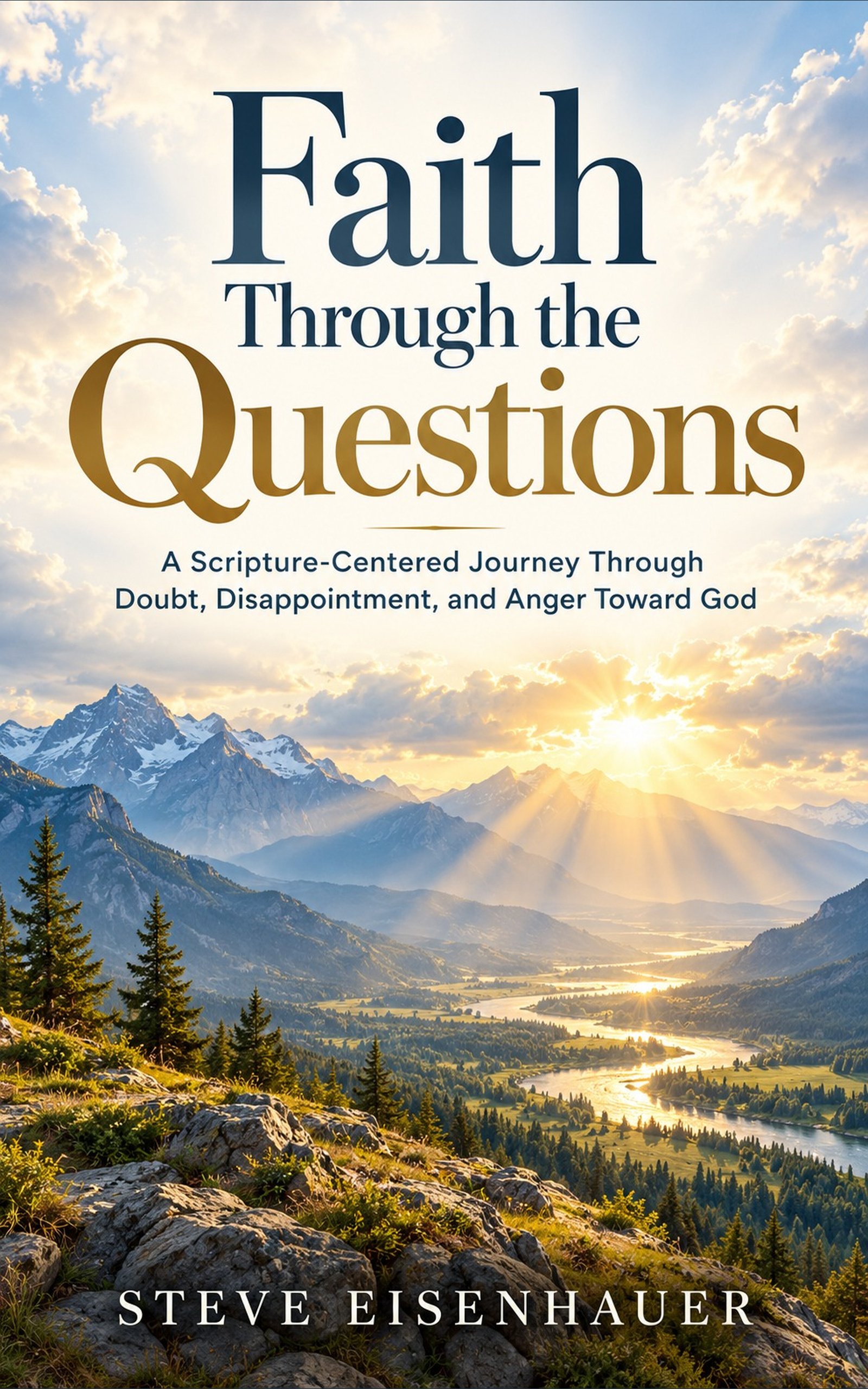
When prayers seem unanswered or life takes a painful turn, it can be hard to know how to speak to God. Faith Through the Questions pairs King James Version Scripture with practical ways to bring doubt, disappointment, and anger into honest prayer, study, and conversation.
Across twelve units, Steve Eisenhauer guides readers through naming a question, writing a lament, reading Scripture in context, and responding responsibly to anger. Readers also practice seeking trustworthy counsel, setting boundaries after harmful experiences, and choosing ordinary acts of faith while larger questions remain open.
Fictional cases, guided worksheets, prayers, and knowledge checks support personal study and facilitated discussion. A ninety-day plan helps readers make time for honest reflection, meaningful support, and practical care.
How the course works
Begin with the unit that fits the question you are carrying or read in order. Read the KJV passage, work through the case, and choose a practice. Check the answer after considering what might serve the person in the example.
Use the workbook privately, with a mentor, or in a facilitated group. Fictional responses are welcome. You can pass on a question, pause a practice, or keep a prayer private.
Name the purpose of the next step. A question about a Bible passage may call for study. A loss may need room for grief. A safety concern may need independent help promptly. Each can be addressed with the kind of care it calls for.
Set a small review date. Notice whether you can pray honestly, receive support, or carry out an ordinary responsibility while a larger question remains open. The ninety-day plan helps you adjust the practice as circumstances change.
Each unit includes a self-check. The final knowledge check is untimed and automatically graded, with unlimited retries. A score of 100% completes the assessment.
Safety and support
This workbook offers Christian education and reflection. A qualified health or mental health professional can assess persistent, overwhelming distress and concerns about daily functioning. Pastoral counsel and practical support can serve distinct needs alongside professional care.
If a leader or group responds with pressure, threats, or retaliation, seek suitable independent support. When someone may be at risk, use appropriate safeguarding procedures. In immediate danger, contact local emergency services when safe.
In a group, work with fictional situations and keep personal disclosure voluntary. Explain confidentiality and its limits before inviting discussion. Avoid asking a participant to justify their choices or return to a contact they consider unsafe.
Protect other people’s privacy when writing or sharing a story. Choose a setting, pace, and level of detail that fit what you are trying to do today.
Course outline
- Name the Question You Are Carrying
- Learn the Language of Lament
- Take Disappointment Seriously
- Bring Anger to God Without Passing It On
- Read the Passage Around the Promise
- Pray When the Answer Is Still Open
- Distinguish God From People Who Speak for Him
- Talk With Someone Who Can Listen
- Hold an Unanswered Question Without Neglecting Today
- Practice Faith in One Ordinary Act
- Make Room for Other People’s Questions
- Build a Ninety-Day Faith and Support Plan
Facilitator guide
Read the unit ahead of time and select a fictional example. Explain session length, consent, confidentiality and its limits, and the right to pass. Offer written or quiet participation and keep prayer aloud optional.
For a fifty-minute session, allow five minutes for welcome, ten for Scripture, ten for the case, fifteen for practice, five for the knowledge check, and five to close. Ask what kind of question or need the case presents before offering an interpretation.
If harm or danger comes up, listen and follow the organization’s established safeguarding procedures. Use qualified referrals where concerns exceed your role. Protect privacy and avoid asking someone to confront a person involved.
Evaluate practice by its honesty, clarity, respect for choice, and feasible next action. A learner can demonstrate the skills while personal details remain private and the larger question remains open.
Discussion prompts by unit
- Separate the event, expectation, and actual question. Offer practical help if the case calls for it.
- Compare the endings of Psalms 13 and 88. Leave room for a lament without a confident ending.
- Ask what the imagined outcome meant and which present need deserves care.
- Distinguish the feeling, safe pause, and repair. Use a fictional example.
- Read the lines around a familiar verse and name the speaker and situation.
- Invite a single honest sentence of prayer or silent reflection.
- Identify an independent helper and a boundary that allows safe study.
- Practice reflecting the concern before asking whether an explanation would help.
- Name what needs action today and what can be brought to a later conversation.
- Connect one conviction with an ordinary action and workable fallback.
- Model accepting a pass without asking for a public explanation.
- Choose a seven-day step and a review measure the learner can own.
Ninety-day planning guide
Within seven days — Make room for one honest prayer, one practical action, and one source of support if needed.
At thirty days — Review which practices you could keep and whether they gave you space to pray, study, or act with care.
At ninety days — Decide what to continue, what to revise, and one question or responsibility that deserves further attention.
Between reviews — Use a fallback when ordinary plans change. Seek suitable help sooner when safety, distress, or daily functioning requires it.
- A question I can state in my own words
- A short passage or prayer I can return to
- One appropriate support request and a backup
- An action that is clear while the question remains open
- A review date and one reason I would seek help sooner